The Polite Stranger Myth: Why a Good Encounter Needs No Perfect Conversation
A good travel encounter needs no perfect conversation. Learn how to choose between a simple exchange, patient listening, and a longer conversation.
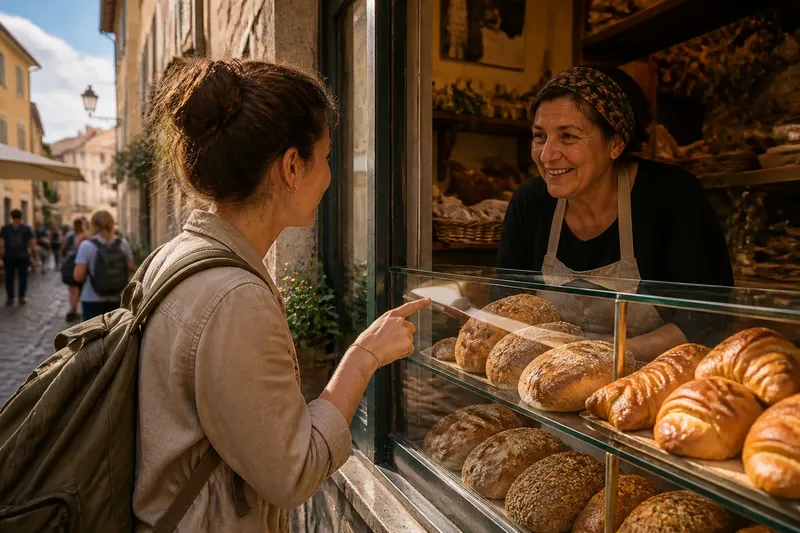
A good travel encounter rarely depends on fluent conversation. In a crowded bakery, a quiet park, or a train station, a shared glance and a few clear words can be enough to make a place feel less distant. The pressure to be charming in another language can obscure what is already happening: people are sharing a setting, responding to one another, and deciding how much contact feels welcome.
There are several ways to meet that moment. You can keep an exchange simple, listen before speaking, or make room for a longer conversation when both people seem interested. None is a lesser version of travel. The useful choice depends on the setting, your comfort, and the other person’s cues—not on whether you can produce a polished line.
A simple exchange can be a complete encounter
Small interactions fit the ordinary rhythm of a place. A greeting to a shopkeeper, a brief thanks to someone who holds a door, or a question about which line to join may be all that the situation calls for. These exchanges are not failed conversations. They do the work of recognition and cooperation without asking either person to perform.
This approach suits travelers who are shy, tired, new to the local language, or simply focused on what they came to do. It also suits places where people are working, commuting, or moving through a crowded public space. A cashier serving a queue may welcome a clear order and a warm thank-you more than an attempt to extend the interaction.
Keep your words concrete. A greeting, a request, and a thank-you are easier to understand than a long explanation. If you need help, name the practical need: the platform, the right bus, or the entrance to a public building. Pointing gently to a map or a written address can make your question clearer without turning the other person into an unwilling guide.
Say you are at a neighborhood bakery and do not know the name of the bread behind the glass. You smile, point to it, and ask a simple question using the local word you have learned for “this one.” The baker indicates the item, you nod and thank them, and the next customer steps forward. The exchange has a clear beginning and end, and its warmth lies partly in respecting that boundary.
Listening first makes room for shared context
Sometimes the most useful contribution is to notice what people are already doing. At a market stall, a small pause may tell you when the vendor is ready to help. At a bus stop, watching where passengers queue can answer a question before you ask it. This is not mind-reading; it is attention to visible context, followed by a polite question if anything remains unclear.
Listening also means allowing someone to finish, even when you recognize only a few words. Facial expression, gesture, and the objects at hand can help you follow the broad meaning. If you do not understand, a calm “Sorry, could you show me?” or a request to repeat a key word is more useful than pretending to understand and acting on a guess.
This style suits travelers who enjoy observing daily routines or who feel more at ease taking in a scene before joining it. It is especially helpful when the conversation is practical and the setting provides clues: a menu on the counter, a destination displayed on a sign, or a map open on your phone. The aim is not to decode every remark. It is to stay attentive enough to respond appropriately.
There is a limit, though. Watching people does not entitle you to their attention, and a public setting is not an invitation to photograph or question everyone in it. Notice the shared activity without treating strangers as a show. If someone turns away, keeps working, or gives a short answer, accept that signal and continue on your own.
A longer conversation needs mutual interest
A more sustained exchange can grow from a shared situation: two travelers waiting out a rain shower, a local resident recommending a nearby walk, or a fellow passenger commenting on a delayed train. This approach suits people who have time, curiosity, and enough energy to stay with an imperfect conversation. It does not require fluency. It requires a willingness to be clear, patient, and alert to whether the other person wants to continue.
Start with the subject already in front of you. A brief question about the weather, a dish, or a nearby landmark is easier to answer than a personal question about someone’s life. If the reply opens a door, follow it. If it closes the subject, let it close. A conversation can be friendly without becoming intimate, and a traveler does not need to collect someone’s story to value the encounter.
Useful tools include a translation app, a phrasebook, and a map with place names written out. Use them to clarify meaning, not to keep a conversation going after interest has faded. Speak in short sentences, avoid slang, and give the other person time to respond. If a translation produces an odd result, say so lightly and try a simpler phrase rather than insisting on the first wording.
Longer conversation is a poor fit when someone is busy, when the setting is private, or when you are too tired to pay attention. It can also be hard to read enthusiasm across a language gap. In those moments, a graceful pause is better than pressing ahead. A smile, a thank-you, and a return to the shared task can leave both people comfortable.
Choose the approach that fits the moment
Before starting an interaction, consider three things: what the setting is asking of people, what you actually need, and what the other person is signaling. A shop counter usually calls for a brief exchange. A shared wait may allow more conversation. Someone absorbed in a task may prefer not to talk, even if you are curious. These are starting points, not fixed rules.
- Choose a simple exchange when you need practical help, are in a hurry, or see that the other person is serving others.
- Choose listening first when local routines are unfamiliar or the scene itself can answer part of your question.
- Invite a longer conversation when time is available and the other person’s replies and attention suggest genuine interest.
- Step back when the response is brief, distracted, or clearly aimed at ending the exchange.
You do not have to decide the whole interaction in advance. Begin with a greeting or a concrete question, then adjust. A short reply can remain short; an unexpectedly lively response can lead somewhere else. That flexibility is more considerate than arriving with a script for how a local person ought to make your trip memorable.
What should you say if you do not speak the language?
Use a greeting, a few key words, and a clear gesture toward the object or place you mean. A map, written address, or translation app can support the exchange, while a calm request to repeat or point can resolve confusion.
Is a brief interaction still meaningful?
Yes. A clear exchange can offer welcome, assistance, or a moment of mutual recognition without becoming a conversation. Its value does not depend on how long it lasts or how much personal information you learn.
How can you tell if someone wants to keep talking?
Look for several cues together: whether they turn toward you, respond with more than the practical minimum, or ask something in return. No single gesture settles the matter, so leave space for an easy ending and accept a short answer without trying to overcome it.
Should you use a translation app with a stranger?
It can help with a practical question or a phrase you cannot express, especially when you show the screen and keep the request simple. If using it slows the exchange or the other person seems busy, switch to a gesture, a written place name, or a polite goodbye.
Let the exchange end while it is still easy
Travelers sometimes work too hard to turn politeness into a story: a kind response becomes an invitation, a short recommendation becomes a promise of friendship. It is kinder to leave room for ordinary explanations. Someone may be helpful because that is what the moment requires, not because they want to spend the afternoon together.
That is also why a perfect phrase is not worth chasing. Memorizing a greeting or learning how to say thank you can be useful; rehearsing a clever line for strangers is usually not. Pay attention to the actual setting, ask plainly, listen to the answer, and let the other person choose how much to give. A good travel encounter can be as small as a shared understanding and a clean, comfortable goodbye.