Before the Travel Blog: How Journey Records Shape What We Remember
See how travel letters, paper journals, and digital records shape what you choose to remember, and find a record-keeping style that leaves room for surprise.
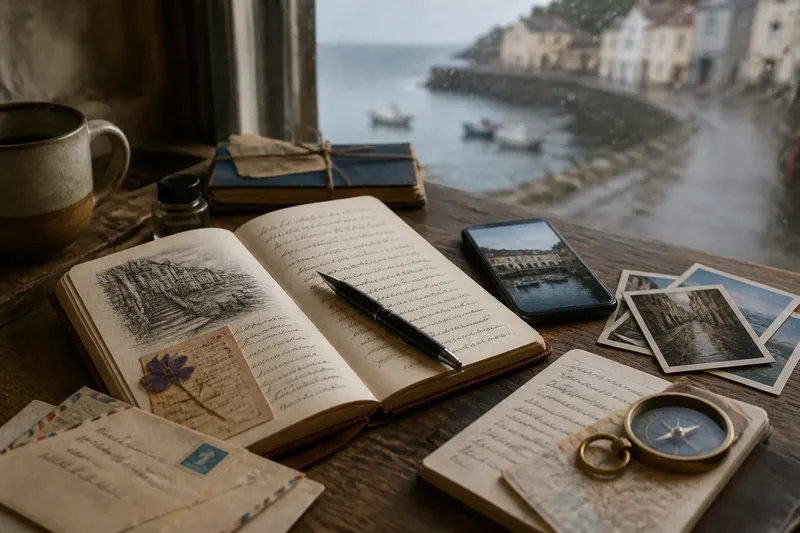
A travel journal can preserve a journey and quietly edit it at the same time. The same afternoon might become a carefully composed letter, a scribbled note on a train, or a phone full of images. Each record asks the traveller to notice different things. Before the travel blog, people still kept journey records; what changed was the form, the audience, and the moments easiest to save.
That difference matters if you want to understand not only what happened, but why one detail stayed with you while another slipped away. A record is never the whole trip. It is a small arrangement of attention, made in the moment or later, for someone else or for yourself.
Journey records begin with a choice of audience
A letter usually has a reader. A journal may be private, though its writer can still imagine a future self turning its pages. A digital note can feel personal, while a photo shared online is already shaped by other people’s possible reactions. The audience changes what seems worth describing.
Writing to a relative might mean reporting the lodging, the weather, and whether the journey went smoothly. Writing in a private notebook might mean dwelling on the smell of wet stone near a station or the embarrassment of misunderstanding a menu. Neither account is more truthful by default. They answer different needs.
Even a record made for no audience can carry an imagined one. A traveller may write as if explaining the day to a friend, or frame a photograph as if someone will ask where it was taken. Recognizing that imagined reader helps explain why some memories arrive already shaped like a story.
Letters turn travel into selected scenes
Letters take time to compose and send. That delay often encourages selection: a traveller cannot include every street, conversation, and meal, so a few scenes have to stand for the journey. The writer may choose what a recipient would understand, find funny, or worry about.
A letter also belongs to a particular moment. It carries the writer’s present mood, before later experiences have softened or rearranged it. The account may say little about a place visited briefly, yet preserve a vivid exchange with a host because that exchange felt urgent enough to share.
The format can make ordinary practical details memorable. A note about a missed connection or a change of lodging may seem minor, but it shows what travel demanded at the time. The letter’s physical marks—folds, handwriting, perhaps a stain—also remain part of the object. They offer texture, though they cannot fill in everything the writer left unsaid.
Paper journals preserve the unfinished day
A paper journal gives a traveller more control over privacy and pace. There is no need to make each entry ready for a recipient. A line can trail off. A sketch can sit beside a list of names or a pressed ticket. The page welcomes fragments that would feel awkward in a polished letter.
That freedom does not mean a journal records everything. Writing takes time and energy, and the traveller still decides what to stop for. A person who writes at night may remember the day through its strongest feeling, while someone who makes brief notes on the move may keep place names, directions, and small observations. The notebook’s habits become part of the memory it holds.
Physical limits also invite choices. A small notebook may encourage concise entries; a larger one can accommodate maps, sketches, or loose papers. The important distinction is not which format is best, but which one makes it easy to return to the details you care about.
Digital records make capture quick and layered
Phones let travellers save several kinds of traces in quick succession: a photograph, a voice memo, a map pin, a message, or a line in a notes app. This is useful when stopping to write would interrupt the moment. It also means a day can leave many records without becoming a coherent account.
Digital collections often preserve context that a paper note might omit. A saved location can help identify a street later; a timestamp can suggest the order of images. But metadata is not memory. A map pin cannot tell you why you chose that café, and a photograph may keep the view while losing the conversation just outside the frame.
The ease of capture can also change what attracts attention. A traveller may look for a clear image, an unusual sign, or a view that will make sense later. That is not necessarily a problem; noticing something because it can be photographed can still lead to a genuine moment. It is simply useful to notice when the device is choosing the subject for you.
How do different records change what stays with you?
What does a letter preserve best?
A letter tends to keep the scenes its writer thought another person needed or wanted to hear. It can preserve the traveller’s voice and concerns in that moment, though unshared details may be absent.
What belongs in a paper travel journal?
A journal suits unfinished observations, private reactions, and small particulars that do not need an audience. Brief notes can be enough if they bring back the setting or feeling later.
Do travel photos replace written notes?
Photos preserve visible details, not the full meaning of a scene. Pairing a few images with a short caption or voice note can retain a sound, thought, or reason for stopping that the frame cannot show.
How can I keep digital records from becoming clutter?
Choose a simple habit that helps you find the traces you care about, such as adding a place name to a note or marking a few favorite images. Saving everything is not required for remembering a trip.
A mixed record can hold both scene and feeling
Many travellers do not need to choose one form. A brief note can give a photograph its missing context; a postcard can mark a day that received no journal entry. The useful combination is the one that fits the day rather than turning record-keeping into a second itinerary.
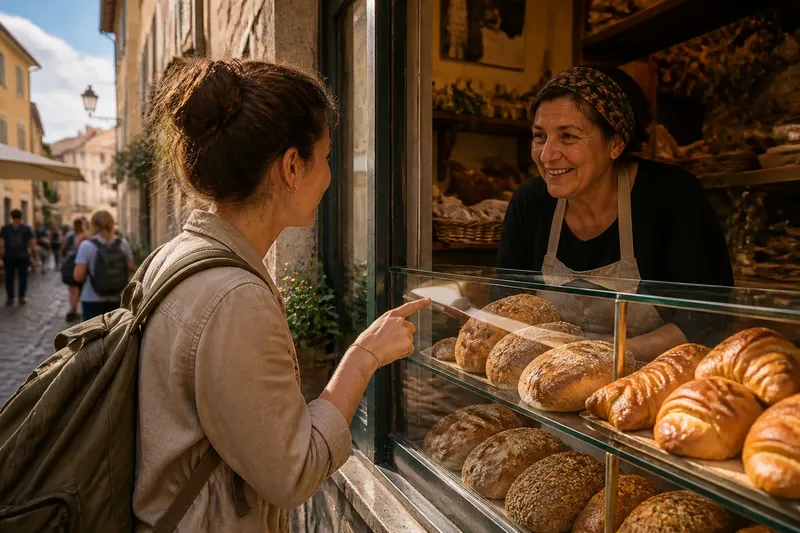
Say you arrive in a coastal town after rain and spend an hour wandering without a plan. You might save one photograph of the harbor, then write, “Followed the sound of gulls; the baker on the corner pointed me toward the steps.” Later, the image may restore the gray light, while the sentence brings back the choice and the helpful exchange. Neither trace needs to account for the whole afternoon.
For a quieter day, a single line in a pocket notebook may be enough. On a crowded travel day, a voice memo recorded after leaving a station might be easier than writing. It is also fine to keep no record at all. Some moments become meaningful precisely because they were not interrupted to be documented.
Choose a record that suits the kind of memory you want
Before a trip, consider what you hope to remember. If you want the texture of your own reactions, leave room for private writing. If you want to recall where a view or restaurant was, save a location with a short note. If you are sending news to someone at home, a letter or message can turn the day into a shared account.
Keep the method light enough to use. A pocket notebook and pen work without a charged device; a phone can gather images and notes in one place. It may help to decide on one small prompt, such as “What surprised me?” or “What did I notice after I stopped looking for the landmark?” A prompt can open a door, but it should not become homework.
Not every tool deserves effort. Sorting every image, writing a complete entry each night, or recording every meal can crowd out the trip itself. Save enough to help memory find its way back, then let the rest remain unrecorded.
Before the travel blog, letters and journals already showed that a journey is remembered through choices: what to tell, what to keep private, and what to leave behind. Digital records make those choices faster and more varied, not less personal. When deciding what to save, ask what you might want to feel again—not just what you might want to prove you saw.